
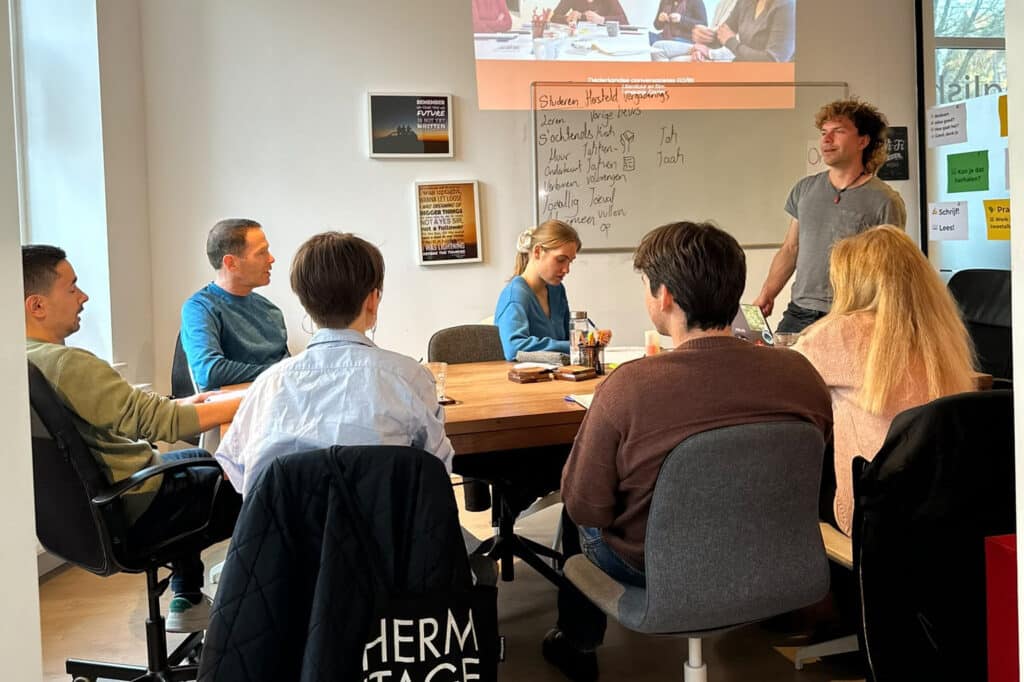
Learn Dutch in full immersion at Language Corner Amsterdam
“Do you teach Dutch in English?” It’s one of the questions we hear most from expats and newcomers in Amsterdam. The honest answer surprises people: no, we teach Dutch in Dutch, from the very first lesson (or at least 90% of it). Here’s why that’s the fastest way to learn, even if you don’t speak a word yet.
But what if I don’t understand anything?
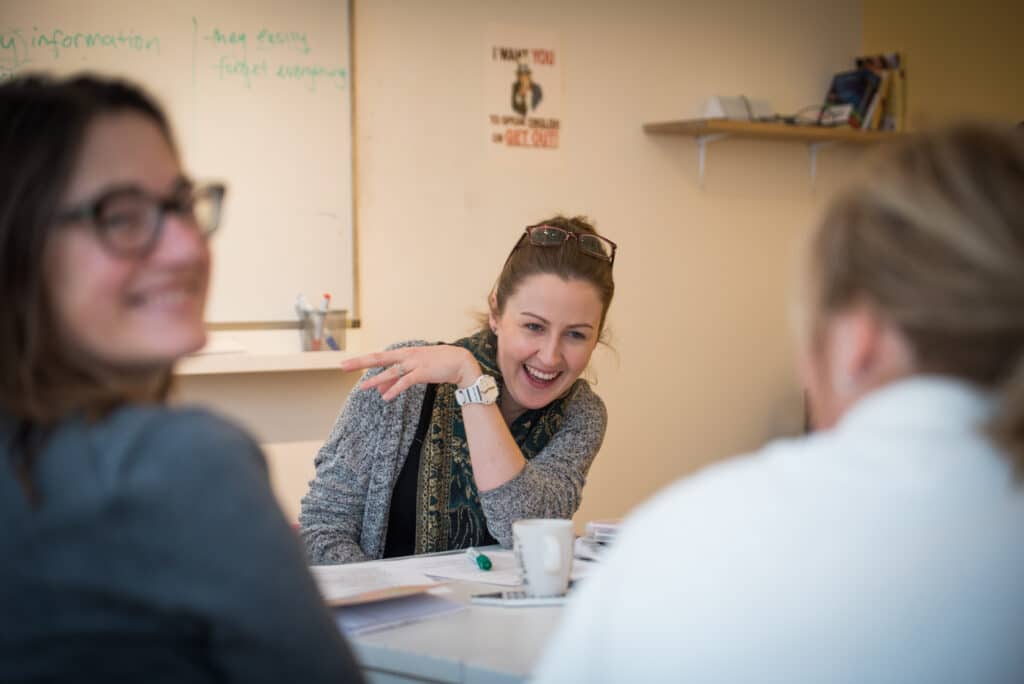
You will understand more than you think. Our teachers don’t speak to a beginner the way they speak to a friend. They choose simple words, repeat them, slow down and use images, gestures, objects and context to make the meaning clear. Nothing is thrown at you without support.
The first lesson can feel uncomfortable, and that’s completely normal. Sitting with that feeling for a short while is part of learning. After two or three classes, most students, especially complete beginners, can follow what’s happening and start using Dutch both in class and outside.
Is English ever used in class?
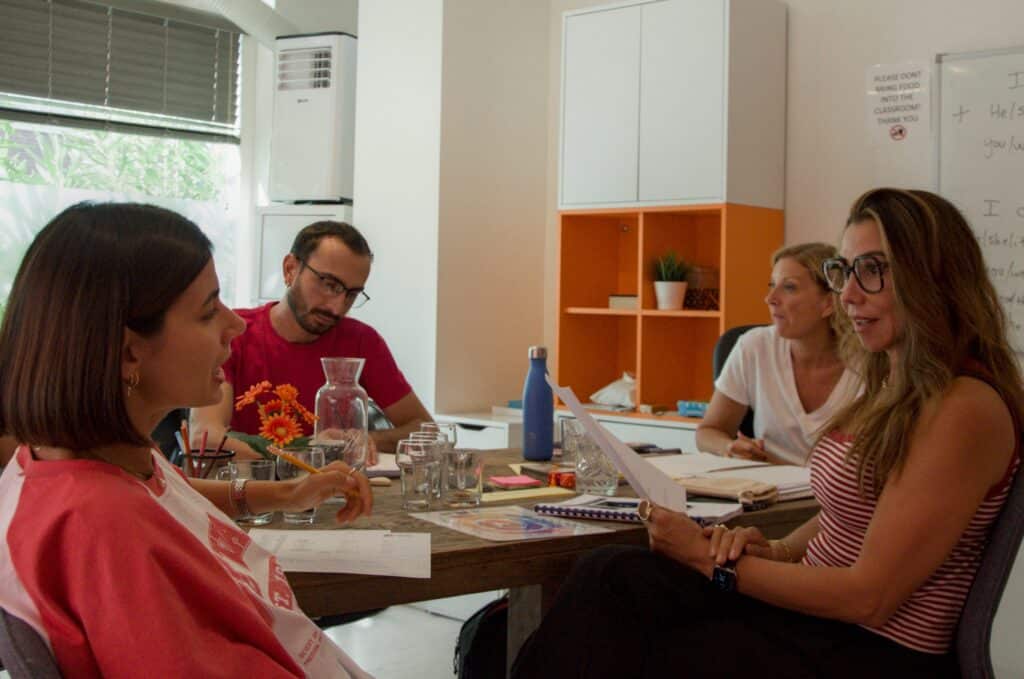
Sometimes, but only when it’s really necessary and when every student in the group speaks English. Even then, we keep it to a minimum.
There’s a simple reason for that. Our classes are international, and not all our students speak English. Explaining Dutch through English would leave those students behind, and that wouldn’t be fair. Dutch is the one language everyone in the room is there to learn, so Dutch is the language we share.
Why does immersion work better than translation?
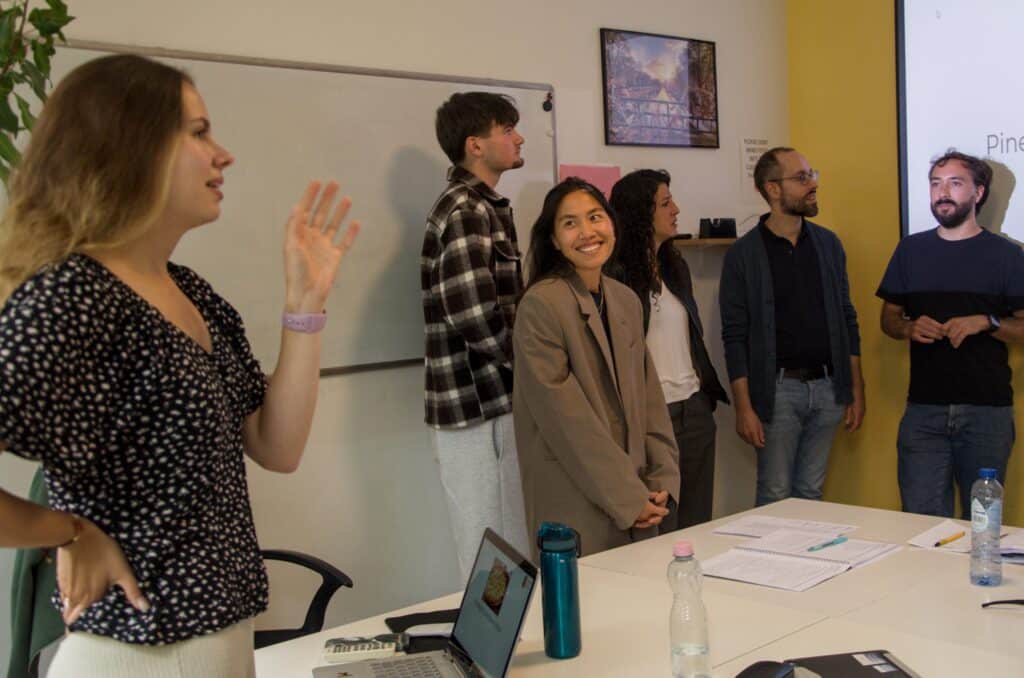
You’ll start listening on day one. You’ll understand more each week. You’ll leave class with Dutch you can actually use the same afternoon, at the supermarket, in the lift or with your colleagues.
And you won’t be alone. Everyone in the room is in the same situation, everyone makes mistakes, and your teacher will make sure you’re following along. You can always ask if something isn’t clear.
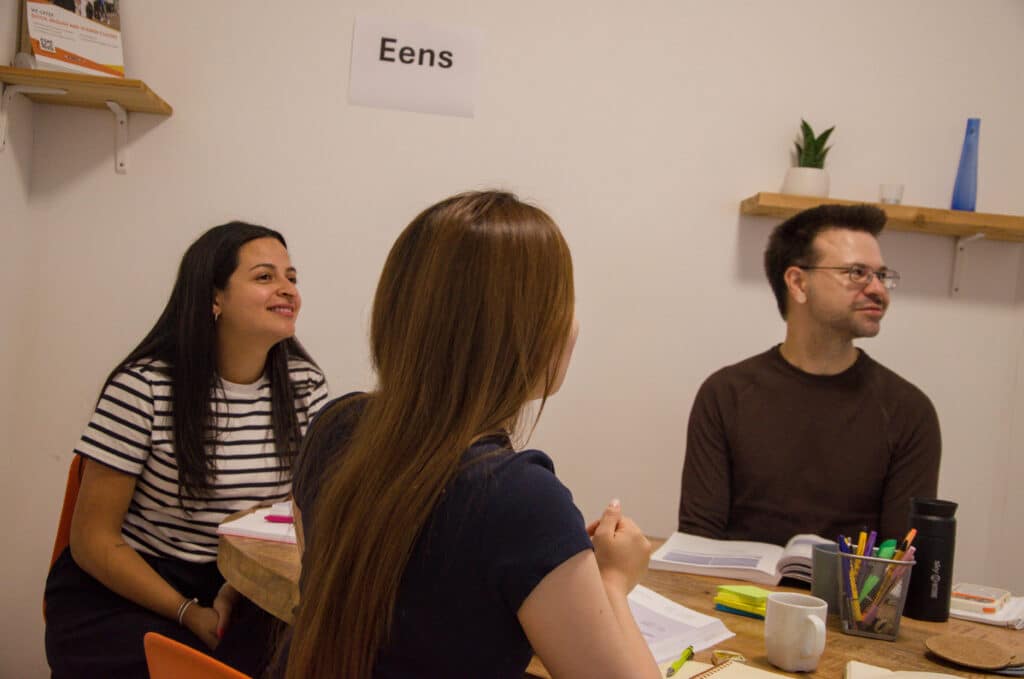
What does this mean for you as a beginner?
Language courses in Amsterdam vary a lot in price, and it’s tempting to go with the cheapest option. But price alone doesn’t tell you much. What matters is what you actually get for your money: how many hours are included, how many students are in the class, how experienced the teacher is, what materials are included, and how much support you get along the way.
A useful way to think about it: instead of comparing total course prices, compare how much speaking time you’re actually buying. A smaller class with an experienced teacher will almost always get you to your goal faster, which can mean fewer courses and less money spent overall. The school that looks cheaper upfront might end up costing you more if you find yourself repeating a level or needing extra private lessons to fill the gaps. Also check how many courses you would need to move up one level., because some schools split levels into 3 or 4 parts.
Ready to hear more Dutch?
What’s the first thing you’d like to be able to say in Dutch: order at the bakery, chat with your neighbours, or survive a Dutch birthday party? Tell us in the comments!
Start learning Dutch in Dutch. Have a look at our Dutch courses in Amsterdam and find the one that fits you.
Frequently asked questions (FAQ)
We teach Dutch in Dutch, therefore English is not required. Our classes are open to students from all over the world, no matter what languages they speak.
Do I need any Dutch to start?
Complete beginners are welcome! Our teachers adapt their language so you can follow from the first lesson.
How long until I can understand and follow the class?
Most students, including complete beginners, can understand and follow the lesson after two or three classes and start using Dutch in and outside the classroom.
Is immersion harder than learning with translations?
It feels harder in the first lessons, but it’s faster. You learn to think in Dutch instead of translating, which is what real conversations require.